
Find Who Owns Wise County Property
Address first, parcel second, owner third. That is the practical route. The Commissioner's EagleWeb is the address-first step, because the Clerk's FAQ states plainly that the land-record index cannot search by street address. Take the owner name it returns and run it as a grantee in the SRA deed index. Read the latest deed image where access is available. The assessment roll points toward the answer, but the recorded instrument shows what the parties actually conveyed.
- Search EagleWeb by situs address or parcel and note the assessment owner.
- Find the most recent conveyance in SRA under the owner as grantee and compare the legal description.
- If an LLC or corporation is named, check its Virginia SCC filing for status and registered-agent context.
- Use the owner’s mailing address only for a lawful property-related contact, not to infer occupancy.
Wise County Owner Record Sources
Several Wise County sources can name a party, yet none tells the whole story. EagleWeb carries the assessor's owner-of-record view. The land index points to a grantee on a recorded deed. SCC filings describe a business entity. GIS places an owner or parcel on a map. Each source refreshes on its own schedule too. A name in any of them may be an entity. It may be a fiduciary, or one of several co-owners.
| Source | Owner Info It Gives | Access |
|---|---|---|
| Commissioner assessment roll | Owner-of-record entry and assessment mailing details | Public EagleWeb search; roll timing applies |
| Circuit Clerk deed index | Parties and recording reference for the latest deed | SRA index; image access may be restricted |
| Virginia SCC | Entity status, registered agent, and name history | Official business search; does not establish land title |
| County InteractiveGIS | Map context and parcel location | Public map; deed and plat control legal ownership |
The owner of record is the person or entity named on an assessment or deed entry. An occupant is not automatically that owner. Mailing and situs addresses can differ as well, so a tax bill or map label proves nothing about where someone lives.
Limits of a Wise County Owner Search
A record names a legal or assessment party. It says nothing about occupancy. Nor does it prove the owner is reachable at the mailing address, or that every interest has been found. Title work is different. It follows the deed chain and its exceptions, while Virginia's Address Confidentiality Program can give eligible participants a substitute address and some records remain redacted or restricted.
Lawful use. Use Wise County owner information for a property question, purchase review, estate matter, or civic research. Do not use it to stalk, threaten, or harass anyone.
Wise County’s Assessment Owner
EagleWeb is Wise County's address-to-owner assessment route. Enter a situs address or a parcel number. Record the owner name exactly as shown, along with the parcel key and legal description. The owner field exists to support the tax roll. It cannot promise that the latest deed has been indexed, or that no later instrument changed title.
Start with the Commissioner of the Revenue. The Clerk's FAQ says no address search exists for deeds. If the roll does not match a recent sale, pull the recorded deed by party name instead. The current-owner page explains how to read the roll's timing and confirm the present owner against the newest instrument.
Wise County Transfers Can Outrun the Roll
Deeds can outrun the roll. The roll is tied to the taxable year and the January 1 assessment date. The Clerk records instruments as presented. No standard number of days governs an EagleWeb update after closing. For a recent transfer, rely on the most recent recorded deed for the transfer parties. Ask the Commissioner about roll maintenance.
File the recording date, deed reference, and parcel number together. A tax bill to the prior owner undoes nothing. Nor does an unchanged assessment owner prove the deed was never recorded. Confirm both records with their custodians.
Wise County Owners May Be Entities
Wise County parcels are often vested in entities rather than individuals. An LLC, corporation, trust, or estate may hold title. The same goes for trustees, executors, administrators, and co-owners. Copy the name exactly from the assessment or deed. The Virginia SCC Clerk's Information System can show an entity's status, registered agent, principal office, and name changes. Those details help interpret the party name, but the recorded deed still governs.
Estates need extra care. Ask the Circuit Court Clerk about wills, estate files, fiduciary qualifications, and deeds of distribution. A death certificate or obituary can pin down a date or a family lead. Neither one transfers title. Note that the predecessor may appear in the land index under an estate or fiduciary name rather than the later owner's own name.
Wise County Mailing Is Not Situs
The situs address is where the parcel physically lies. The tax mailing address is just where notices go. A business address or post-office box can occupy that field. Neither one says where the land sits. A street address can even be newer than the deed's rural route, town name, or metes-and-bounds description.
Link the assessment to the deed with the parcel number and legal description. County GIS and E911 assign current addresses. An E911 number is not a boundary call. If municipal jurisdiction matters, check the town line and confirm which local office holds zoning records. Never read an owner's mailing address as proof of residency or occupancy.
Wise County Court Records Add Context
Court files often answer what a deed alone cannot. A foreclosure, partition, quiet-title suit, lien dispute, or estate order can explain a change. It can show why the owner of record changed. Virginia Court Online Services offers a statewide menu. Access varies by court and case type, though. The Wise Clerk advises confirming with the local office that a record is actually available. Note the case number, parties, filing date, order, and any land description. A caption by itself proves nothing about a parcel.
The Virginia court online-services menu appears below. Find the service you need there, then verify any Wise County case with the Clerk.
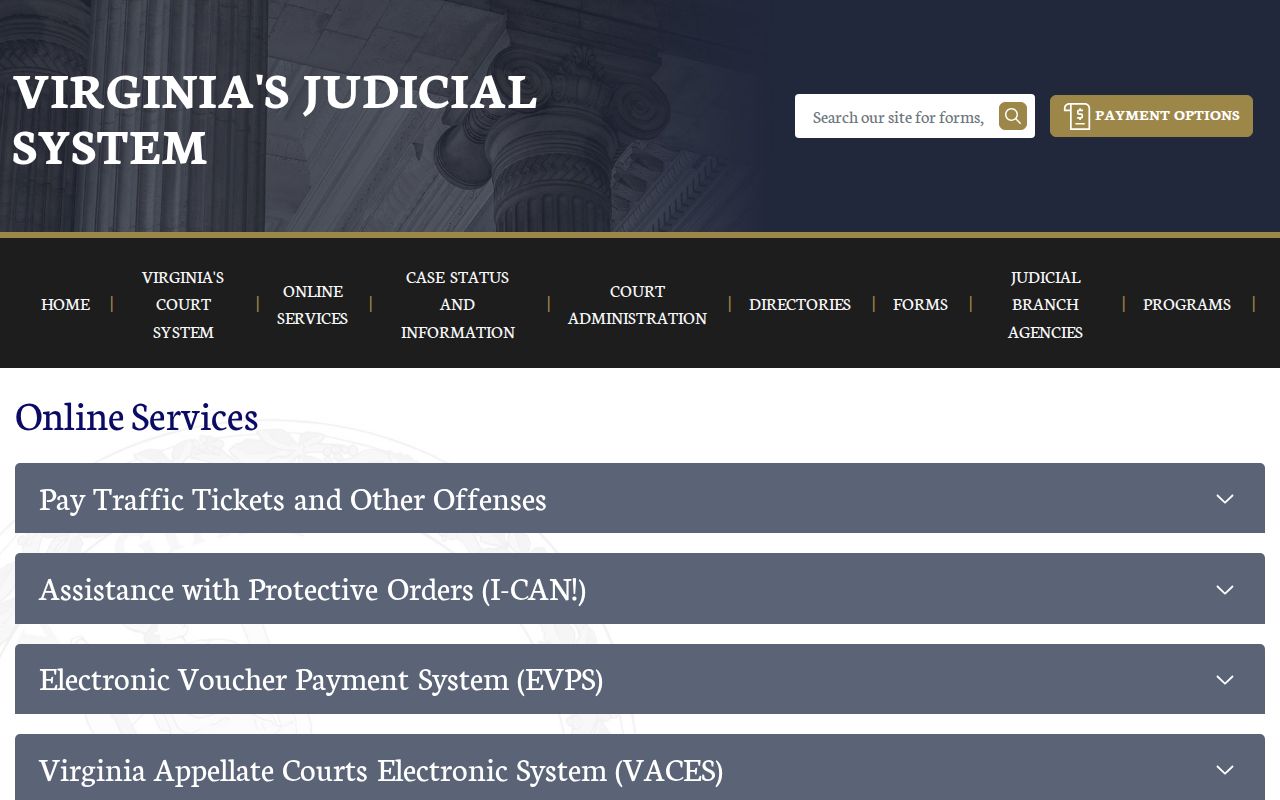
Online case information is only a lead. It cannot replace reading the court record and the land instrument itself.
Virginia Owner Privacy Has Limits
Virginia keeps land and assessment records largely public, but the law draws lines. Remote redistribution of land-record data is restricted. Sensitive identifiers must be redacted from remote images. Participants in the state Address Confidentiality Program may use a substitute address. If a protected address shows up anyway, ask the custodian about the lawful redaction process.
Voter registration is not a property-owner directory. Virginia's election handbook states that VERIS is not public. Certain applications may be disclosed only after required redactions. Mailing addresses and obituaries cannot establish that an owner lives on a parcel. Business filings cannot establish it either. For questions about ownership, rely on the recorded deed and the assessment. Those are the records that actually answer them.
To trace an earlier chain, continue with the Wise County former-owner search. Then follow each grantor reference backward.
Wise County Court and Business Files Add Context
Sometimes the assessment owner is not a person. An LLC, corporation, trustee, estate, or fiduciary may hold title. Search the party exactly as the deed spells it. Check likely predecessor names too. Virginia's State Corporation Commission Clerk's Information System can identify a business entity and its registered agent. But that filing is not a land conveyance. Only the parcel's recorded deed confirms which real-estate interest the entity received. A changed business name, trustee, or estate representative can break an owner-name search. The land itself never moved.
When a transfer follows a death, work the probate side alongside the deed index. The Circuit Court Clerk's probate and fiduciary files matter here. A will or court order may show who held authority to convey. A deed of distribution or later heir deed is the land-record step to follow. A chain showing a lien, foreclosure, partition, or quiet-title dispute calls for the statewide court-services menu. The goal there is to spot a possible docket. Then ask the Wise Clerk for the case file and read any order or release. A court caption never establishes present ownership of a specific parcel.
Wise County GIS helps tie legal descriptions to a mapped parcel. That helps when an older tract has been divided or combined. Its own terms say the deed and recorded plat control legal ownership and acreage. Keep the owner name, parcel number, case number, and deed reference together. When one system cannot explain a change shown in another, ask the custodian of that system.
Wise County Court and Business Files Add Context
Business entities complicate an owner search quickly. If the assessment owner is an LLC, corporation, trustee, estate, or fiduciary, search the name exactly as the deed spells it. Also check likely predecessors. Virginia's State Corporation Commission Clerk's Information System identifies the entity and its registered agent. But that filing is not a land conveyance. The parcel's recorded deed is still the place that confirms which real-estate interest the entity received. A renamed business, new trustee, or different estate representative can break the chain. This can happen even when the parcel never changed hands.
Deaths transfer land through their own paperwork. Review the Circuit Court Clerk's probate and fiduciary materials alongside the deed index. A will or order may show who had authority to convey. A deed of distribution or later heir deed is the land-record step to follow. A lien, foreclosure, partition, or quiet-title dispute in the chain points to the statewide court-services menu for a possible docket. Then ask the Wise Clerk for the case file. Read any order or release in full. A caption alone does not establish ownership of a specific parcel.
Wise County GIS maps legal descriptions to parcels. This helps where an older tract was divided or combined. Per its own terms, the deed and recorded plat control legal ownership and acreage. Keep the owner name, parcel number, case number, and deed reference together. When one system cannot explain what another shows, ask the custodian directly.
Keep the Wise Ownership Sources in Their Roles
A dependable ownership check always pairs two sources. The assessor's owner-of-record field shows who the county currently lists. The newest recorded conveyance for the same parcel number shows how that ownership changed hands. The Commissioner of the Revenue answers questions about the assessment entry. The Circuit Court Clerk explains the land index. The office also explains any recorded instrument, such as a deed or release. GIS adds map context, and the Treasurer confirms the tax bill status. A Wise County case-search result can flag a possible dispute. Only the underlying order or deed actually explains what happened to the real estate.
Keep notes on your property search. Jot down the date and preserve the exact spelling, tax-map reference, and instrument number. Wise County's public portals do not update every record at once. The assessor publishes no fixed refresh interval after a closing. When a transfer is recent, call the custodian. Do the same when a parcel was divided. Call before treating an apparent mismatch as an error or a missing owner.