
Trace Past Wise County Owners
The deed chain runs in reverse. Begin with the newest recorded conveyance. The index entry names the prior party, and that name becomes the next search. No official page states how far the online Wise County index reaches. So resist any cutoff quoted from a generic statewide description. When results stop, ask the Clerk about local deed books and indexes. The Library of Virginia keeps microfilm finding aids. Pre-1856 land sits in the parent counties.
| Transfer Date | Grantor to Grantee | Instrument Type | Book/Page or Instrument |
|---|---|---|---|
| Latest deed date | Prior owner to current grantee | Record the label shown in SRA | Copy the Clerk reference exactly |
| Earlier deed date | Earlier grantor to prior grantee | Deed, estate, trustee, or other recorded transfer | Follow the prior instrument cited |
| Continue backward | Repeat grantee-to-grantor link | Branch for releases or mineral deeds | Ask Clerk for books beyond online reach |
Three tools cover most of this work. SRA offers an indexed party search, the Clerk's counter provides local images and older deed books, and LVA catalogs its microfilm. Chains predating 1856 lead to Lee, Scott, and Russell. A newspaper obituary can date a party, but only the recorded deed proves ownership.
Walk the Wise County Deed Chain
The deed index runs by parties, not by address. Find today's owner listed as grantee. The deed names the grantor, and that earlier name becomes the next grantee search. Save the date and reference. Pair them with the legal description, and follow any split, merger, or estate conveyance as its own branch rather than a simple sale.
- Locate the newest deed with the present owner as grantee.
- Read the grantor, legal description, instrument type, and prior reference.
- Search the grantor as a grantee in the earlier period and repeat.
- At the online limit, ask the Clerk for local indexes, deed books, and LVA microfilm options.
- Grantor
- The party conveying an interest in the deed.
- Grantee
- The party receiving the interest named in the deed.
- Chain of title
- The linked sequence of conveyances and related land interests.
- Reverse index
- A party search that follows a prior owner back to an earlier acquisition.
- Legal description
- The written land description used to match old and current parcels.
How Far Wise County Records Reach
Neither the online start year nor the image cutover appears on the official pages. A missing name online is a coverage question. It is not proof the record never existed. The county dates from 1856. Cut from Lee, Scott, and Russell, it kept older deeds in the parent counties, so the right book may sit in another courthouse.
Lawful use. Former-owner research in Wise County can support a title review, estate matter, property history, or purchase diligence. Do not use the information to track, threaten, or harass anyone.
Wise County SRA Stops at Parties
Virginia's Secure Remote Access system indexes recorded land instruments by party. It is an index, not a full archive. Names, dates, and instrument types appear where those fields exist. Image access depends on local authorization. The earliest Wise County year and the image cutover are not stated, so treat an SRA result as the start of a deed-chain search rather than a complete copy of every historic volume.
The statewide SRA help page explains the difference between index access and image access. Older transfers need the Clerk. Ask which local indexes and deed books can be checked in person.
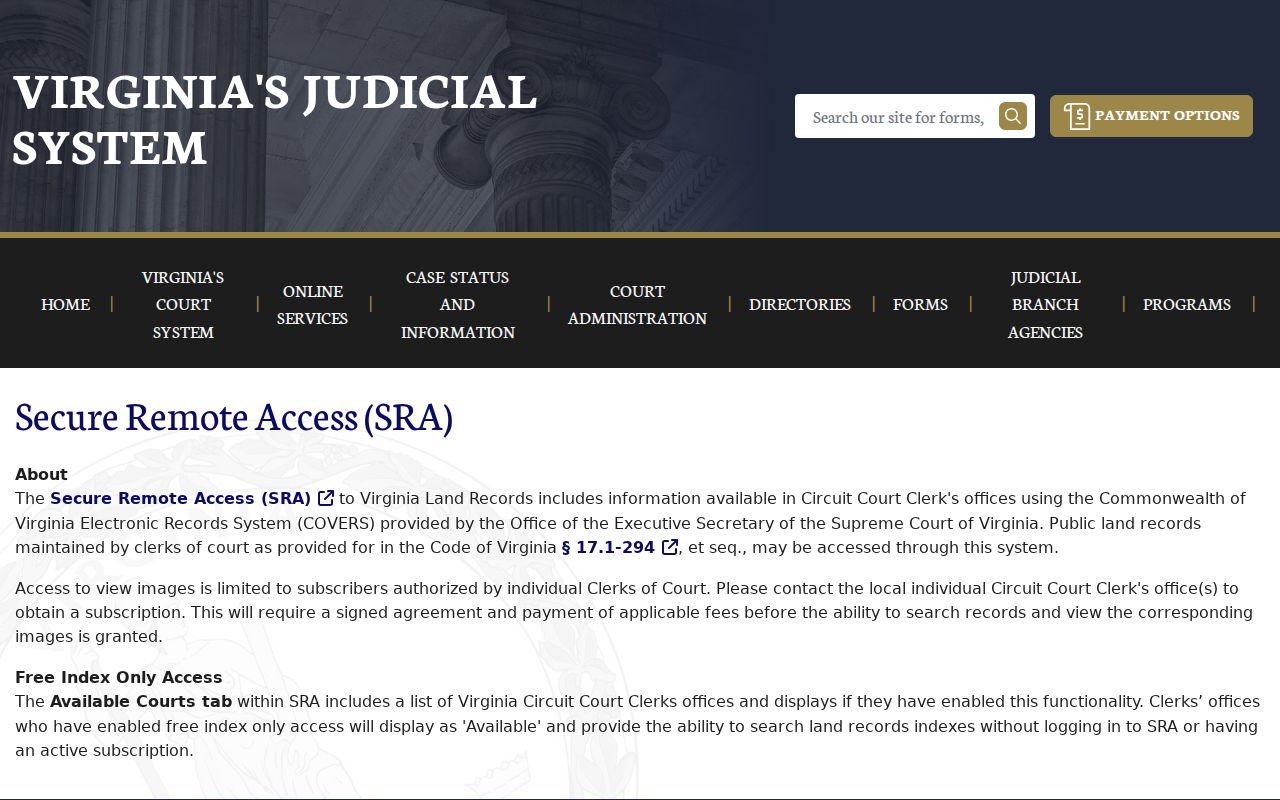
An online dead end proves little. It is a coverage question for the Clerk, not evidence that the former owner's deed was never filed.
Wise County’s 1864 Courthouse Loss
Wise County formed in 1856 from Lee, Scott, and Russell. The first courthouse burned in 1864. Federal troops set the fire, according to the Virginia Department of Historic Resources survey. An 1876 building followed; the 1896 courthouse stands today. No official list itemizes every book lost or restored. Treat the fire as a reason to verify a series, not as a blanket excuse for every gap in a deed chain.
Ask the Clerk directly. Confirm that the deed book, index, or court file from the period survives locally. The Library of Virginia catalog lists Wise County microfilm. A microfilm copy may preserve a volume even when the remote index hides it, so note each source and its exact date span as you go.
Wise County Newspapers Name Earlier Owners
Newspapers fill in what deeds leave out. The Library of Virginia bibliography lists Wise County titles and date spans, from the Big Stone Gap Post of 1892–1928 to the Appalachia Independent of 1920–1983. The Wise County Herald ran in Coeburn. It lasted from 1907 to 1908. Wise News spans 1901 to 1911. A legal notice can name an estate, foreclosure, sale, company, or vanished community.
Use the paper as a lead, never as proof. A notice or obituary can point to a party or date, but the Clerk's deeds, probate files, or court orders hold the record that transfers ownership. Consult the Library of Virginia Wise newspaper list for titles and holdings.
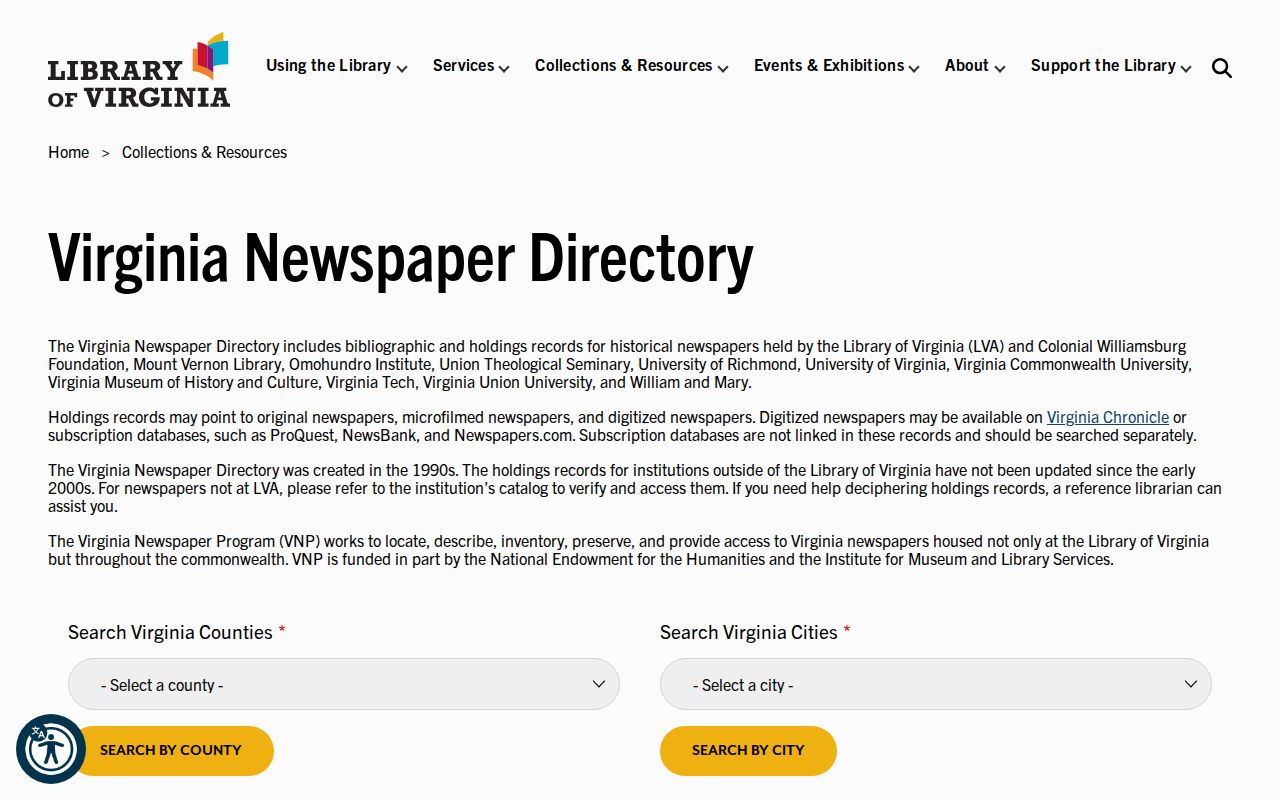
Match the title and date range first. Then narrow the archival request and cite the land or court record that settles ownership.
Wise County Estate Deeds Branch Chains
A death leaves a hole in the chain. The last deed names the deceased owner. The next transfer may wait years. It often arrives when an heir sells or records a deed of distribution. The Clerk of Circuit Court holds the estate side. Wills, estate files, fiduciary qualifications, and guardianships all sit there, so search the decedent, the executor or administrator, the estate name, and any later grantee. Ask for the will book and page, the estate file number, the list of heirs, and any recorded deed of distribution.
A will or obituary only hints. The recorded fiduciary instrument and the deed prove the property moved. When no will exists, intestate administration and heir deeds may fill the gap separately. Keep the legal description, because an estate file often cites a parent tract rather than the current parcel number.
Wise County Chains Reach Parent Counties
Before 1856, Wise County land belonged to Lee, Scott, or Russell County. Track the chain there. Start with the oldest Wise conveyance you can find. Note the grantor, grantee, property description, and any older reference it cites. County formation moved where a record was filed. It did not move the land. It does not mean the first deed came after Wise County existed. Ask the parent county's clerk or archive which deed series covers that place and year.
Old place names can hide records too. The county seat went by Big Glades and Gladeville. It later became Wise Court House, then Wise. Early records also call Big Stone Gap Mineral City. A current address works well for finding a parcel. But the older chain may sit under a tract or place description that no postal address uses anymore.
Wise County Mineral Chains Separate
Coalfield deed histories often split a parcel apart. A surface tract may be separated from its coal estate, other minerals, timber, support rights, access, or a railroad corridor. A later surface deed may not carry the mineral rights an earlier deed reserved. Search each company under its current and predecessor names. Then trace assignments, easements, releases, and satisfaction instruments as their own links in the chain.
Old conveyances describe streams, ridges, roads, and parent tracts. Compare the full legal description, not just acreage or a map shape. The county GIS itself says deeds and plats control legal acreage and ownership. A mineral or boundary dispute may still need professional title review even when the surface owner chain looks complete.
Need only the newest owner of record? Use the current assessment entry and confirm it against the latest deed; this record trail runs backward.
Virginia Vital Records Can Support an Estate Search
An owner chain sometimes passes through a death. When a deed record leads through heirs, the Virginia Department of Health genealogy guide lays out the public-period indexes and research routes. Virginia birth records open to the public 100 years after the event. Death, marriage, and divorce records open after 25 years. Earlier records stay restricted under the law's eligibility rules. A researcher can turn instead to probate files, recorded estate deeds, newspaper notices, or Library of Virginia holdings.
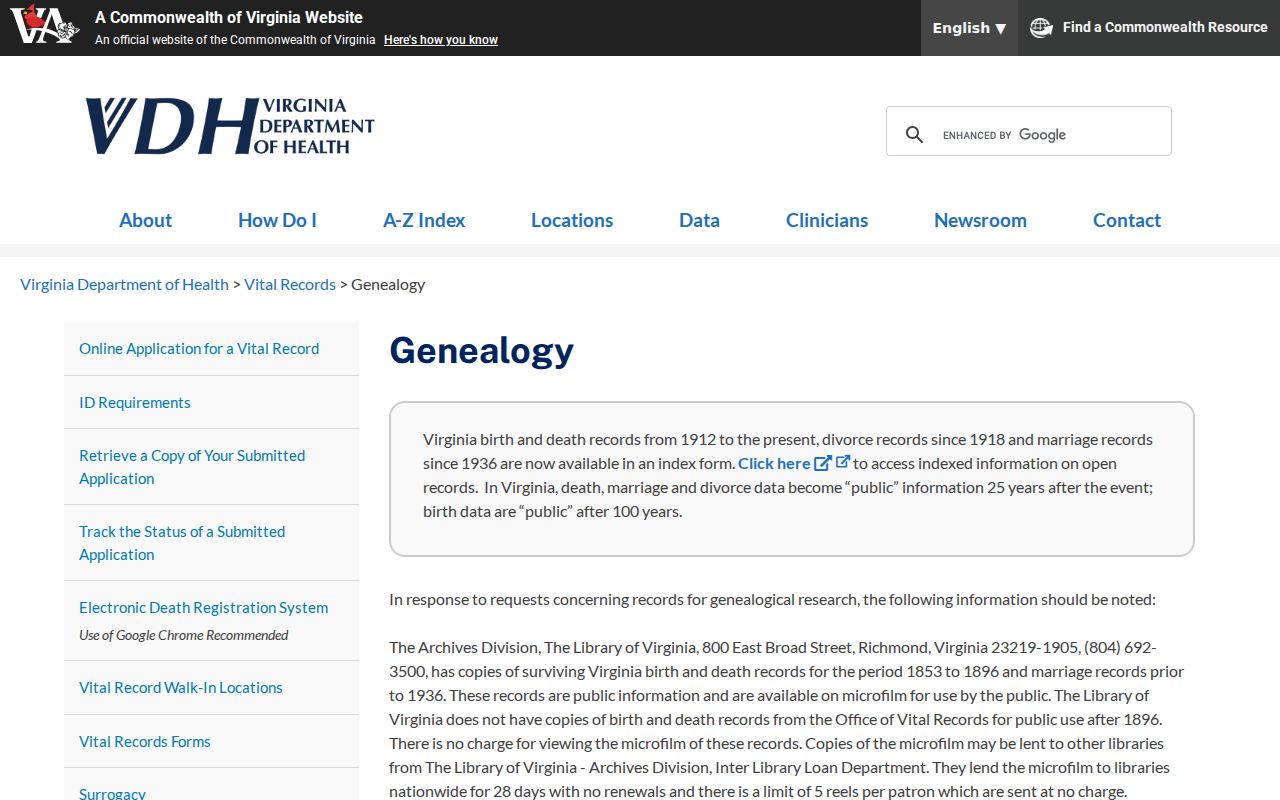
The state page points researchers to the open-period index. It also lists Library of Virginia microfilm resources. A vital record helps identify a person or an estate. It does not convey land. To document the transfer itself, use the Circuit Court Clerk's deed and probate records.